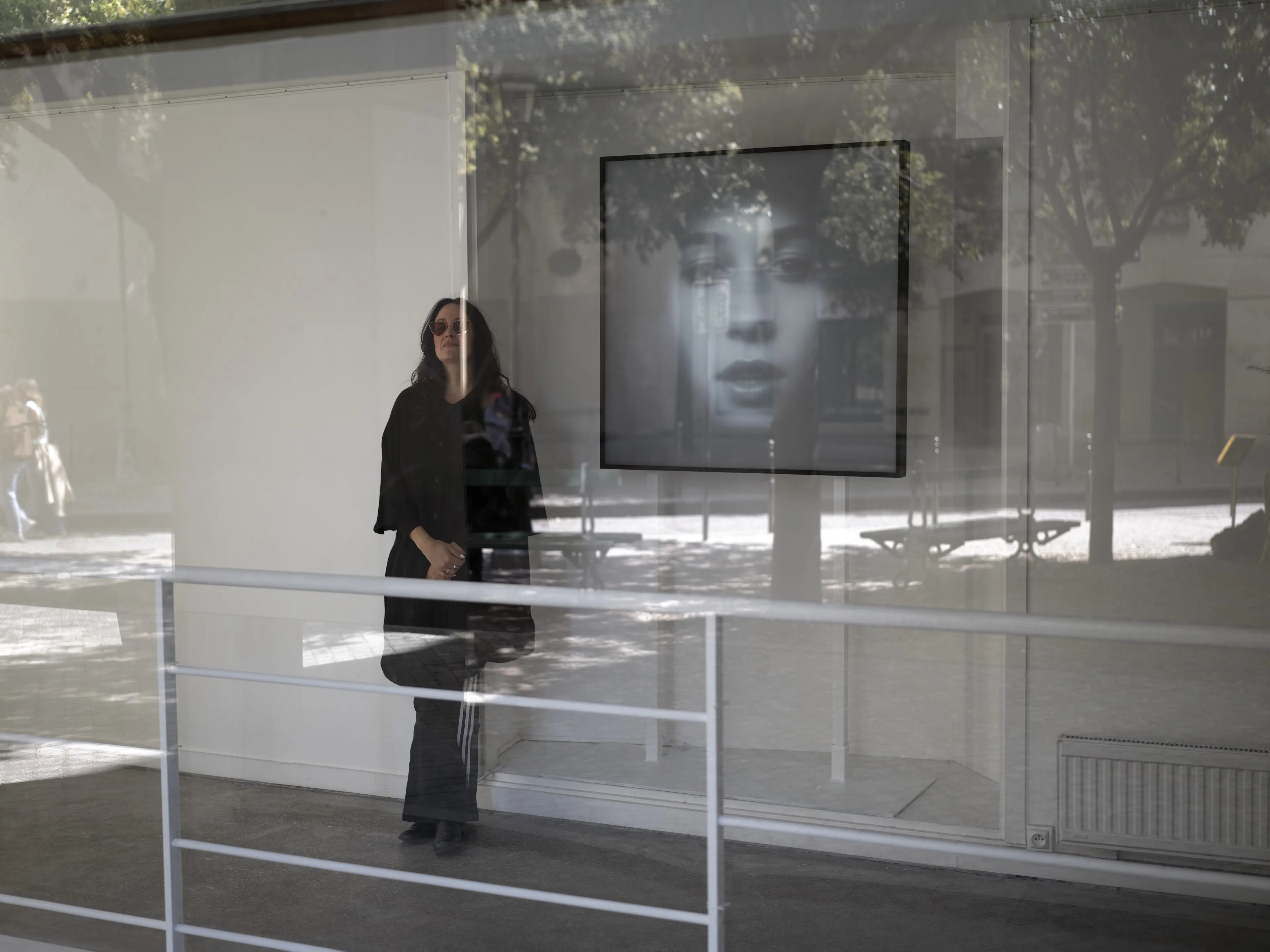
The image succeeds in its central conceit: using architectural glass to stage a genuine dialogue between a living subject and a photographic one, while implicating the exterior world as a third, uninvited presence. The tripartite layering is not accidental — it holds. What prevents exhibition tier is a degree of compositional busyness in the reflections that competes with rather than amplifies the primary relationship between the two faces, and the shadow compression in the figure's clothing that loses the body at a moment when the body is the argument.
- Formal
- A layered, tripartite arrangement: the reflective glass plane acts as the primary compositional device, merging interior space (woman standing) with exterior reflection (trees, courtyard). The large-format photographic print of a face occupies the upper-right quadrant, creating a second portrait within the frame. The white railing cuts horizontally across the lower third, anchoring the image geometrically. [object Object]
- Technical
- Critical sharpness falls on the woman and the printed portrait simultaneously, which is the image's structural achievement. The reflected exterior elements are intentionally softened by the glass surface. Metadata appears incomplete (f/0, ISO 0, 0mm) suggesting either in-camera recording error or post-export stripping. Exposure is calibrated to the interior, allowing exterior reflections to blow partially in highlights. This serves the layering effect rather than undermining it. Shadow detail in the woman's black clothing is largely lost. Dynamic range is deliberately sacrificed at both ends — highlight clipping in the exterior reflection and shadow compression in the figure's clothing. The midtones where the printed face resides are well-preserved.
- Semantic
- The frame stages a confrontation between two faces — one living, one printed — while the exterior world bleeds through as reflection. The woman may be a visitor, curator, or the artist whose work is on display. The glass mediates every relationship in the image: between viewer and subject, between present body and archived face, between inside and outside.
- Historical
- Conceptual photography and the archive; Street photography through reflective surfaces; New Topographics — the built environment as subject; Feminist portraiture and self-representation; [object Object]; [object Object]; [object Object]
- Curatorial
- The vertical alignment of the living woman and the printed face is a deliberate formal rhyme that produces genuine semantic tension — two portraits, two modes of being seen The glass surface is used as a conceptual device, not merely a visual effect — it enacts the image's argument about mediation and representation The railing's horizontal geometry anchors an otherwise unstable spatial field, preventing the image from dissolving into pure abstraction